


Types of CNC Milling Services
Redexpart offers 3, 4 and 5 axis CNC milling services to create complex geometries with high precision.

CNC milling on 3 axes
This CNC milling process can move along the X, Y and Z axes and can only perform surface milling. It is suitable for making 2D or simple 3D parts, such as flat and simple curved parts, models, etc.

CNC milling on 4 axes
4-axis CNC routers can rotate around a fixed axis, often called the A-axis or rotary axis, in addition to moving along the X, Y, and Z axes. This process can be used to machine complex 3D parts.

CNC milling on 5 axes
This milling machine has the ability to move along the X, Y and Z axes, as well as rotate around two rotation axes (A and B). The 5-axis CNC router can handle more complex shapes and is suitable for producing high-precision parts.
Benefits of CNC milling from Redexpart
Speed
Redexpart offers rapid production of CNC milled parts, some of which can be produced in as little as 7 days.
Quality
With numerous control checks throughout the entire production process to ensure that the final product meets your requirements.
Materials
Redexpart offers a wide range of materials to choose from, including metals, plastics and composites, to suit a variety of needs and applications.
Prototyping
Redexpart offers prototyping services, allowing you to test and refine your design before moving on to mass production.
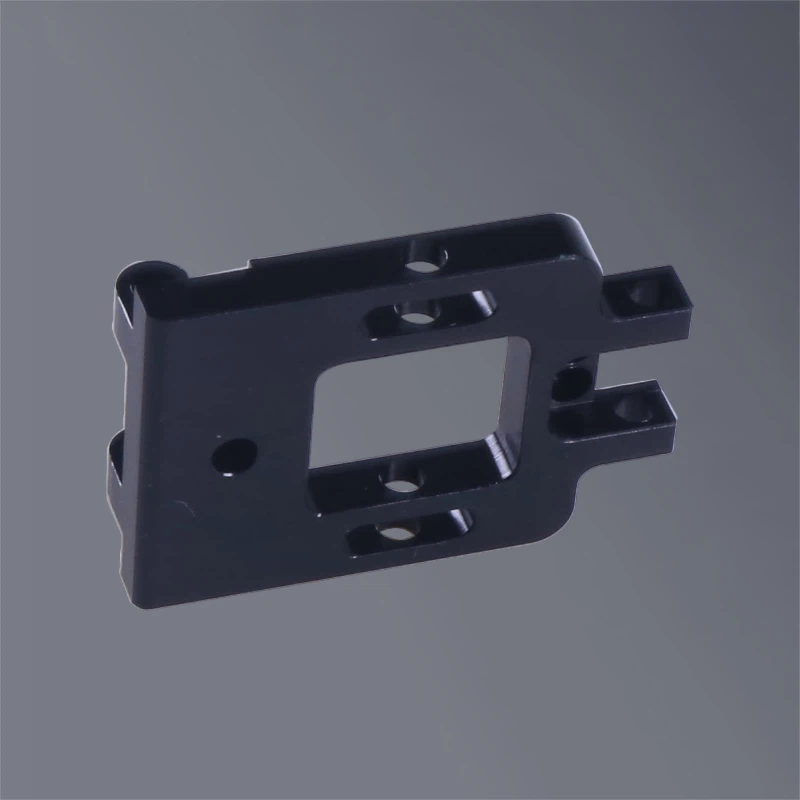
CNC milling parts



How it works?

CNC (Computer Numerical Control) milling is a process used to create complex and precise shapes by removing material from a workpiece using a cutting tool controlled by a computer program. Here's how it works.
Design
The first step in CNC milling is creating a three-dimensional digital design of the part or component using computer-aided design (CAD) software. The design is then converted into a format that can be read by a CNC router.
Programming
The converted design is fed into the CNC router's computer control system, which converts it into machine code (G-code). This code contains instructions on how the cutting tool should move and remove material from the workpiece.
Installation
The workpiece is then secured to the milling machine workbench using clamps or other methods. The cutting tool is also installed and adjusted in accordance with the required characteristics.
Milling
Once everything is set, the CNC router is started and the cutting tool moves according to the G-code instructions. The cutting tool removes material from the workpiece in a series of passes until the desired shape is achieved.
Finishing
Once the milling process is complete, the workpiece may require additional finishing steps such as sanding or polishing to achieve the desired surface finish.
Available materials for CNC turning services
Metal materials
|
Aluminum |
Stainless steel |
Mild, alloy and tool steel |
Other Common Metals |
|
5052 |
201 |
Mild steel 1008 |
Brass 260 |
|
5083 |
303 |
Mild steel 1018 |
Brass 2680 |
|
6061 |
304 |
Mild steel 1020 |
Brass 360 |
|
6061-T6 |
316 |
Mild steel 1025 |
Brass 385 |
|
6061-T651 |
316L |
Mild steel1045 (#45) |
Brass H59 |
|
6063 |
401 |
1215 alloy steel |
Brass H62 |
|
6082 |
410 |
4041 alloy steel |
Bronze |
|
ADC12 (A380) |
416 |
Steel 40Cr |
Copper 101 |
|
416L |
4130 alloy steel |
Copper 110 |
|
|
420 |
4137 Alloy Steel |
Titan TC2 |
|
|
430 |
4140 alloy steel |
Titan TC4 |
|
|
440C |
4040 alloy steel |
Titan TC5 |
Plastic materials
|
General plastics |
Reinforced plastics |
|
ABS |
Garolite G-10 |
|
PP |
Polypropylene (PP) 30% |
|
H6 |
Nylon 30% |
|
POM-G |
FR-4 |
|
POM-S |
PMMA (acrylic) |
|
PVC |
PEAK |
|
HDPE |
|
|
UVMPE |
|
|
PC |
|
|
PAT |
|
|
PTFE |
Tolerances for CNC milling work
|
Nominal Size Limits |
Metals (ISO 2768-F) |
Plastics (ISO 2768-M) |
|
0.5 mm* up to 3 mm |
+0.05 mm |
±0.1 mm |
|
More than 3 mm to 6 mm |
+0.05 mm |
±0.1 mm |
|
More than 6 mm to 30 mm |
+0.1 mm |
+0.2 mm |
|
More than 30 mm to 120 mm |
+0.15 mm |
±0.3 mm |
|
More than 120 mm to 400 mm |
±0.2 mm |
±0.5 mm |
|
More than 400 mm to 1000 mm |
+0.4 mm |
±0.8 mm |
|
More than 1000 mm to 2000 mm |
±0.5 mm |
±1.2 mm |
Application of CNC turning services
CNC turning services can be used for a variety of purposes, but they are of great importance in the metalworking industry.


Questions and answers about CNC machining
Q: What is CNC machining?
Q: Why choose CNC machined parts from Redexpart?
Q: What is the difference between subtractive and incremental manufacturing processes?
Q: What kind of finish does CNC machining have?
Redex provides online CNC machining services. Get a free quote on CNC machined parts today.
All information and downloads are safe and confidential.